
Radu-Emil Precup – Qiang Shen – Yiyu Yao – Annamária R. Várkonyi-Kóczy – Lluis Godo
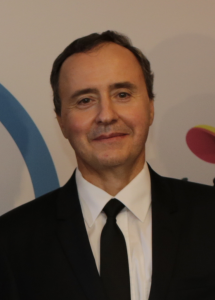
Radu-Emil Precup is currently with the Politehnica University of Timisoara (UPT), Romania, where he became a Professor in the Department of Automation and Applied Informatics, in 2000, and he is currently a Ph.D. supervisor in automation and systems engineering. Since 2022 he is also a senior researcher (CS I) and the head of the Data Science and Engineering Laboratory of the Center for Fundamental and Advanced Technical Research, Romanian Academy – Timisoara Branch, Romania. From 2016 to 2022, he was an Adjunct Professor within the School of Engineering, Edith Cowan University, Joondalup, WA, Australia. He is currently the director of the Automatic Systems Engineering Research Centre of the UPT. From 1999 to 2009, he held research and teaching positions with the Université de Savoie, Chambéry and Annecy, France, Budapest Tech Polytechnical Institution, Budapest, Hungary, Vienna University of Technology, Vienna, Austria, and Budapest University of Technology and Economics, Budapest, Hungary. He has been an Associate Editor of IEEE Transactions on Fuzzy Systems (2018-2022, Certificate of Commendation in 2022), Information Sciences (Elsevier, 2021-2024), Engineering Applications of Artificial Intelligence (Elsevier, 2021-2024), Applied Soft Computing (Elsevier, 2014-2024), Expert Systems with Applications (Elsevier, 2021-2024), Communications in Transportation Research (Elsevier, 2021-2024), Applied Artificial Intelligence (Taylor & Francis, 2022-2024), and Healthcare Analytics (Elsevier, 2021-2024), is the Editor-in-Chief of Romanian Journal of Information Science and Technology, and is an editorial board member of several prestigious journals including IEEE Transactions on Neural Networks and Learning Systems, IEEE Transactions on Cybernetics (IEEE SMC Best Associate Editor Award in 2025), IEEE Open Journal of the Computer Society, Evolving Systems (Springer Nature Editorial Contribution Award in 2025), Journal of Engineering-JOE (IET and Wiley), and Journal of Intelligent and Connected Vehicles (Tsinghua University Press, China, and IEEE).
Prof. Precup is an IEEE Fellow, in the 2025 class of fellows, “for contributions to fuzzy and data-driven control of servo systems”, a corresponding member of The Romanian Academy, a member of the US National Academy of Artificial Intelligence – NAAI, a Fellow of the Asia-Pacific Artificial Intelligence Association, a Doctor Honoris Causa of the Óbuda University, Budapest, Hungary, and a Doctor Honoris Causa of the Széchenyi István University, Győr, Hungary. He received the Elsevier Scopus Award for Excellence in Global Contribution (2017), was named a 2022 academic data leader by Chief Data Officer (CDO) Magazine, and was listed as one of the top 10 researchers in artificial intelligence and automation (according to IIoT World as of July 2017).
Title: Model-based and Data-driven Low-cost Fuzzy Controllers with Servo System Applications
Abstract: This keynote talk covers the following topics: an overview of the Process Control Group at the Politehnica University of Timișoara in Romania; data-driven versus model-free control; our contributions; the structure and tuning of two-degree-of-freedom (2-DOF) fuzzy controllers; servo system control applications; and evolving fuzzy systems in relation to control. The presentation will include transportation applications within the context of an ERA-NET Cofund Urban Accessibility and Connectivity (ENUAC) JPI Urban Europe project.
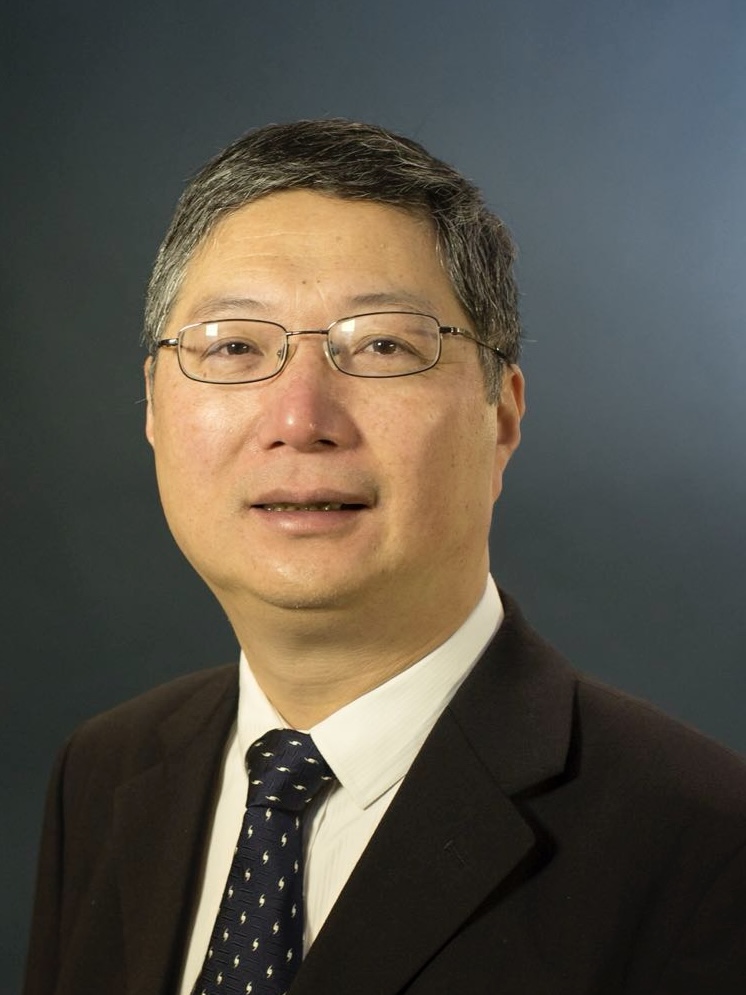
Qiang Shen received a PhD in Computing and Electrical Engineering from Heriot-Watt University, UK, in 1990, and an Honorary DSc in Computational Intelligence from Aberystwyth University, UK, in 2013. He holds the Established Chair of Computer Science and has served two terms as Pro Vice-Chancellor at Aberystwyth University. He is a Fellow of the Royal Academy of Engineering and a Fellow and Council Member of the Learned Society of Wales. He is Chair of the Subpanel for Computer Science and Informatics for the UK Research Excellence Framework (REF) 2029 and a member of REF 2029 Main Panel B: Physical Sciences, Engineering and Mathematics. He has chaired and delivered keynotes at numerous international conferences; supervised over 90 postdoctoral researchers and PhD students as primary supervisor; and authored three research monographs and more than 520 peer-reviewed papers, many of which have received Best Paper awards. He was selected to carry the Olympic torch in celebration of Alan Turing’s centenary during the London 2012 Olympic Torch Relay, and he is the 25th recipient of the IEEE Fuzzy Systems Pioneer Award.
Title: Harnessing AI with Limited Data: Approximate Knowledge Interpolation and Practical Applications
Abstract: AI stands to transform nearly every aspect of contemporary life. Much of its success is driven by deep learning techniques that rely on vast quantities of data. Yet, a pivotal question emerges when faced with limited data for a new problem, especially if such data is ambiguously characterised. Can AI maintain its efficacy under these constraints? This talk delves into contributions addressing this query, highlighting how fuzzy rule interpolation (FRI) enables approximate reasoning in situations marked by sparse or incomplete knowledge. This is particularly relevant when traditional rule-based inference mechanisms falter because observations do not align with existing rules.
The talk will centre on a prominent subset of FRI techniques, Transformation-based FRI (T-FRI). Kicking off with an exploration of the foundational T-FRI approach, it will segue into a concise overview of its expanded repertoire, each addressing certain shortcomings inherent to the original method. Subsequently, real-world applications of these methodologies will be showcased, exemplifying their potency in tackling formidable challenges in domains like network security and medical diagnosis. These cases will underscore AI’s capability to function effectively even with incomplete knowledge and ambiguous data. The talk will conclude with a brief look at promising future directions in this vital area of research.
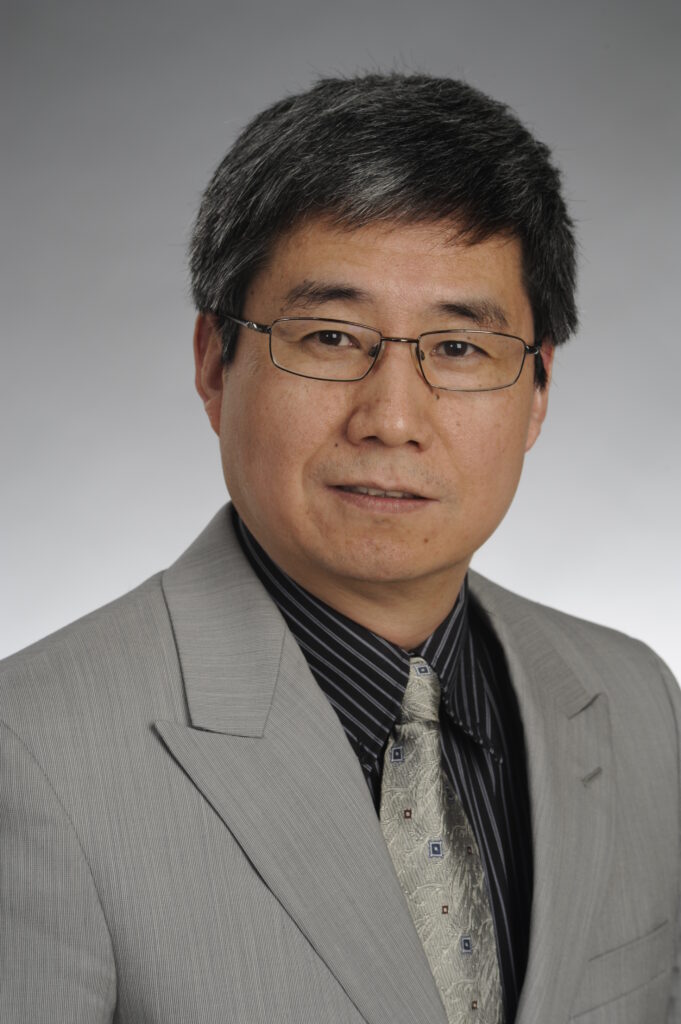
Yiyu Yao is a professor of computer science with the Department of Computer Science, University of Regina, Canada. His research interests include three-way decision, granular computing, Web intelligence, rough sets, fuzzy sets, interval sets, formal concept analysis, information retrieval, machine learning, and data mining. He proposed a theory of three-way decision, a decision-theoretic rough set model, and a triarchic theory of granular computing. He has published over 400 papers. He was selected as a highly cited researcher by Clarivate from 2015 to 2019. He served as the President of International Rough Set Society (2017-2018). He is the President of Web Intelligence Academy. He serves as an associate editor of International Journal of Approximate Reasoning, Information Sciences, Applied Intelligence, and Cognitive Computation, and an editorial board member of others.
Title: Three-way decision: A computational intelligence perspective
Abstract: A theory of three-way decision is about thinking in threes, problem solving in threes, and computing in threes. This talk covers the principles, methods, and applications of three-way decision from a computational intelligence perspective. The three parts of the talk are (a) basics of three-way decision, (b) thinking in threes in computational intelligence and mathematics, and (c) implications of three-way decision to computational intelligence.
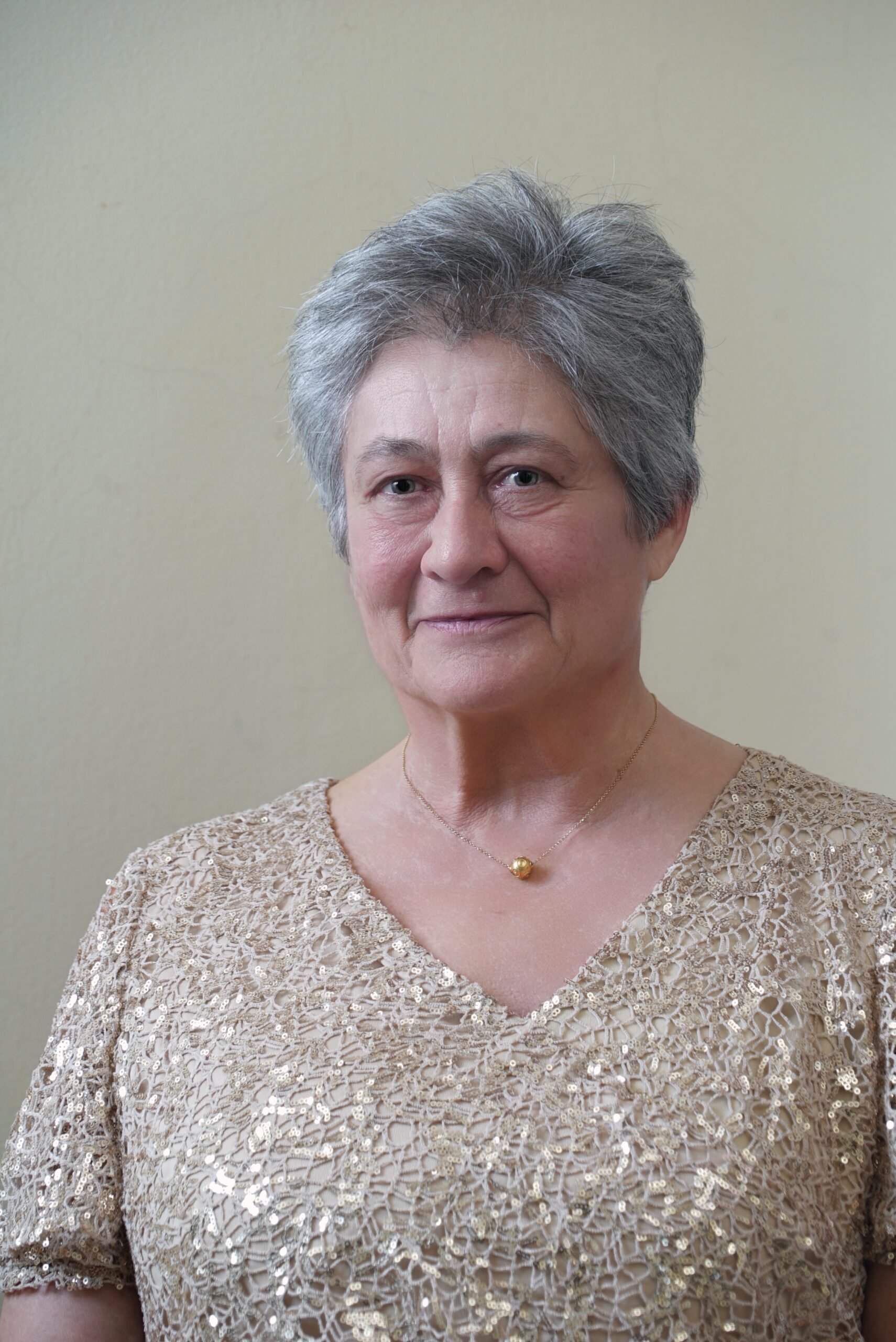
Annamária R. Várkonyi-Kóczy received the M.Sc. degree in electrical engineering, the M.Sc. Degree in mechanical engineer-teacher, and the Ph.D. degree from the Technical University of Budapest, Budapest, in 1981, 1983, and 1996, respectively. She was honored by the “Doctor of Academy” (D.Sc.) title from the Hungarian Academy of Sciences, Budapest, in 2010. In 2017 she received “Dr. Habil.” degree from the Széchenyi University, Győr. She was a Researcher with the Research Institute for Telecommunication, Budapest, for six years, followed by four years with the Group of Engineering Mechanics, Hungarian Academy of Sciences. From 1991 to 2009, she was with the Department of Measurement and Information Systems, Budapest University of Technology and Economics, Budapest. From 2009 to 2025 she was a Full Professor with Óbuda University, Budapest. Since 2009, she has been Full Professor with the John von Neumann University, Kecskemét at the Department of Information Technologies. Since 2013 she is also Full Professor at J. Selye University, Slovakia. She is a founding professor and project leader with the Integrated Intelligent Systems Japanese-Hungarian Laboratory. Her research interests include digital image and signal processing, uncertainty handling, machine intelligence, intelligent computing, big data, and IoT. She is author/co-author of more than 42 books, 83 journal papers, and 270 conference papers. Dr. Várkonyi- Kóczy was Vice-President of the Hungarian Fuzzy Association between 1999 and 2007. She is fellow of IEEE and the Asia-Pacific Artificial Intelligence Association (AAIA), an elected member of the Hungarian Academy of Engineers, a member of the Hungarian Fuzzy Association, the John von Neumann Computer Society and the Measurement and Automation Society, Hungary.
Title: Fuzzy Models in Anytime Systems
Abstract: In resource, data, and time insufficient conditions, anytime algorithms, models, and systems can be used advantageously. Anytime systems are real-time systems with the aim to provide continuous operation in case of changing circumstances and to avoid critical breakdowns in cases of missing input data, temporary shortage of time, or computational power. Naturally, while the information processing can be maintained, the complexity must be reduced, thus the results of the computing become less accurate. Although, it is ensured that the results are the best in the given circumstances and that the error of the output is always known.
Embedding fuzzy (and neural network) models in anytime systems extends the advantages of anytime systems, e.g. with respect to the transient behavior of the dynamic systems. Unfortunately, however, in many cases we face difficulties finding appropriate fuzzy models to be adopted.
The talk focuses on different methods and techniques that can be applied to transform ‘classical’ fuzzy models into appropriate models for easy and effective anytime use. The concepts and techniques of anytime systems together with solutions of anytime fuzzy (and neural) approaches will be addressed. To illustrate efficiency, in the presentation, several applications will also be discussed, focusing on areas such as signal-, image processing, fault diagnosis, and control.
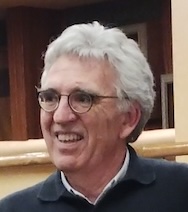
Lluis Godo is a Research Professor at IIIA-CSIC, the Artificial Intelligence Research Institute (IIIA) of the Spanish National Research Council (CSIC), Barcelona, Spain. He obtained his MSc degree in Mathematics from the University of Barcelona (1979) and the PhD in Mathematics from the Technical University of Catalunya (1990). His main research interests include logics for Artificial Intelligence (AI), in particular graded uncertainty reasoning formalisms, mathematical fuzzy logic, computational argumentation systems, and more recently probabilistic and possibilistic foundations for reasoning with conditionals and belief update. He is author of more than 250 publications in international journals and conferences.
He has served in the PC of numerous national and international AI-oriented conferences (like ECAI, ECSQARU, IJCAI, KR, UAI, AAMAS, SUM, CCIA, CAEPIA) and more fuzzy logic-oriented conferences (like EUSFLAT, FUZZ-IEEE, IFSA, IPMU, LATD, ManyVal, ESTYLF). He is currently co-Editor-in-Chief of the journal Fuzzy Sets and Systems (Elsevier). In the recent past he has also been associate editor of Autonomous Agents and Multi-Agent Systems (Springer), Artificial Intelligence (Elsevier) and Soft Computing (Springer).
He is past vice-president of the European Society for Fuzzy Logic Technologies (EUSFLAT) and of the Catalan AI association (ACIA). In 2006 he was nominated Fellow of the European Coordinating Committee for Artificial Intelligence (ECCAI, currently EurAI) and in 2013 Fellow of the la International Fuzzy Sets Association (IFSA). In 2023 he received the EUSFLAT Scientific Excellence Award.
Title: Conditionals within Possibility Theory: two approaches
Abstract: Conditionals play a key role in different areas of logic, probabilistic and non-monotonic reasoning, and they have been studied and formalised from different angles. In this talk we will focus on recent developments on various foundational aspects of conditionals related to the probabilistic and possibilistic models of uncertainty. First we will show that any plain probability on an algebra of events can be extended to a bigger Boolean algebra of (compound) conditionals in such a way that the (plain) probability of a conditional is its conditional probability. Hence a version of the Stalnaker’s Thesis holds in this setting. Then we will also show that a suitable notion of conditional possibility, for which a triviality result similar to Lewis’ in the probabilistic setting can be proved, is fully compatible with the above algebraic setting of Boolean algebras of conditionals in the sense that an analogue of Stalnaker’s Thesis holds as well. On the other hand, we will consider a different approach to conditionals as random quantities by Gilio, Sanfilippo and colleagues, based on de Finetti’s notion of conditional as a three-valued object, and we will show that it is not only compatible with the above Boolean algebraic setting, but it also admits a faithful possibilistic counterpart. In the latter case, conditionals are interpreted as possibilistic variables instead, and their possibilistic expectation (a Sugeno-like integral) provides a means of extending a possibility on plain events to arbitrary (compound) conditionals.